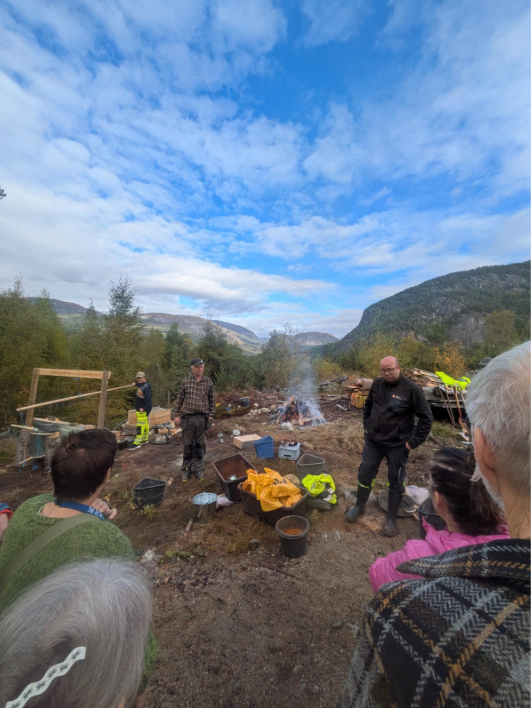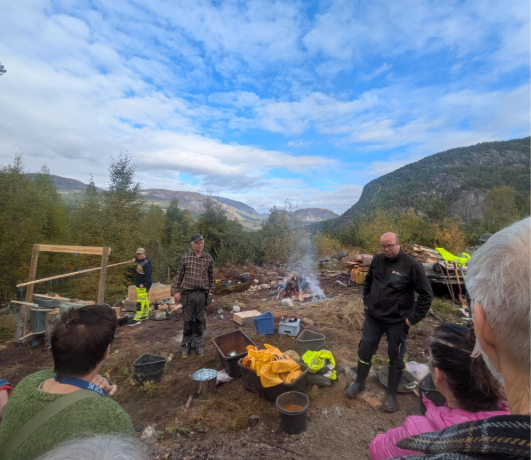
Peter Hewitt, Intangible Cultural Heritage Project Coordinator at Museums Galleries Scotland, used an ICOM UK Bursary to present at the ICOM-ICR conference in Norway and join a post-conference excursion to the Setesdal Valley.
ICOM UK’s Bursary Scheme is open to members who are interested in attending any international event or activity related to the museum and heritage sector.
I presented a paper on Scotland’s Coastal Communities and Museums Safeguarding Intangible Cultural Heritage, highlighting work undertaken through the ICH Scotland Partnership’s Protection Through Connection: Safeguarding ICH in Scotland programme. Following discussions on Scotland’s living heritage traditions, including foodways, fishing practices and wedding customs, participants explored the intangible cultural heritage of Norway’s Setesdal Valley through visits to museums, historic sites and cultural landscapes linked to mining, folk traditions and rural life. A particular highlight was meeting communities who continue traditions such as bunad (traditional folk costume), stev and stevjing (folk singing and dance), and musical practices centred on the fiddle and jaw harp.
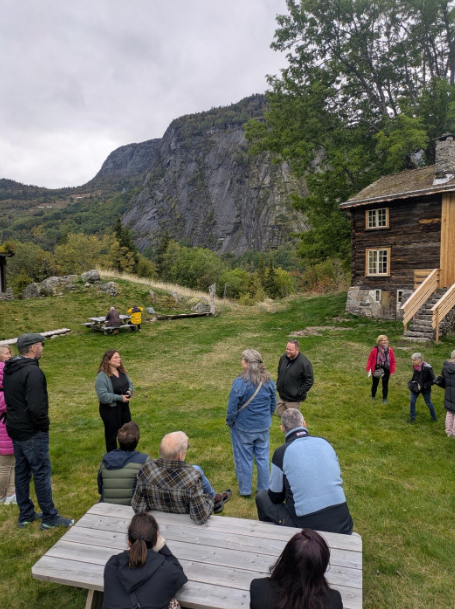
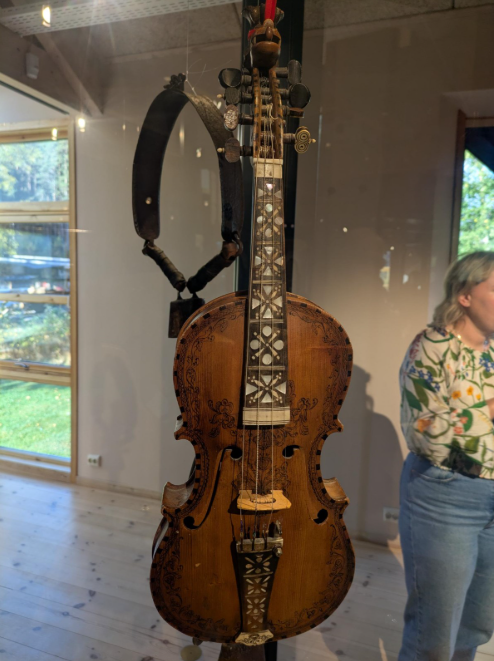
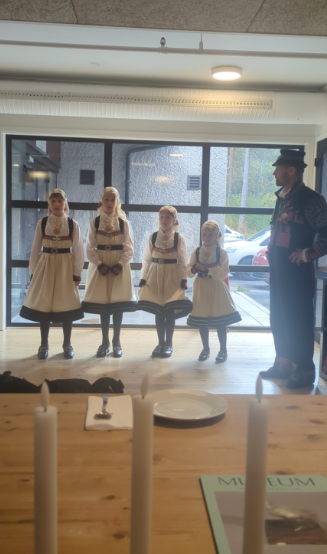
A visit to Setesdalmuseet provided valuable insight into how the region’s living heritage is being actively sustained. Through discussion and performance, we saw how music, dance and singing remain embedded in everyday life in Setesdal. We enjoyed a performance of the gangar dance by a father and his three daughters, accompanied by museum educator Stina Brandin Hovet on the Hardanger fiddle, Norway’s national instrument. Traditional stev songs, often performed as four-line verses, tell stories about performers, dancing and music-making. They may be sung solo or exchanged between singers in a form known as stevjing.
The knowledge gained from the Setesdal excursion will be shared in several ways. First, through briefings and knowledge exchange with colleagues at Museums Galleries Scotland and across the ICH Scotland Partnership, a process that has already begun. The international case studies presented during the conference also offer valuable insights that can inform future work on collections, place-based practice and climate resilience within Scotland’s museum sector.
Second, the event provided practical lessons from colleagues in Norway, the Philippines, Czechia and elsewhere who shared their experiences of developing UNESCO Representative List inscriptions, an area of growing interest for the ICH Scotland Partnership. Their openness and generosity in discussing both opportunities and challenges were particularly valuable.
Finally, the conference created strong connections with Norwegian colleagues that are already developing into potential cross-border projects and funding opportunities. These collaborations have the potential to strengthen international exchange, support shared learning and build the infrastructure needed to advance intangible cultural heritage work in the years ahead.
I would like to thank ICOM UK for its bursary support and the organisers of the ICOM-ICR conference, particularly Rune Holbek, Maria Bjorkroth and their teams, for delivering such a rewarding and inspiring event.