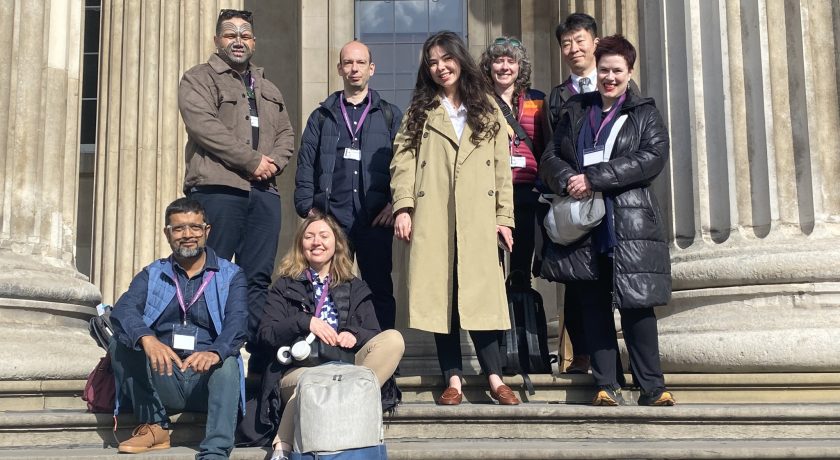
In April 2026, the British Museum’s International Training Programme (ITP) were able to support ITP Fellows from China, Croatia, Türkiye, Ukraine and Uzbekistan to return to the UK to attend ICOM UK’s conference 2026 which focused on Museum Diplomacy in Action.
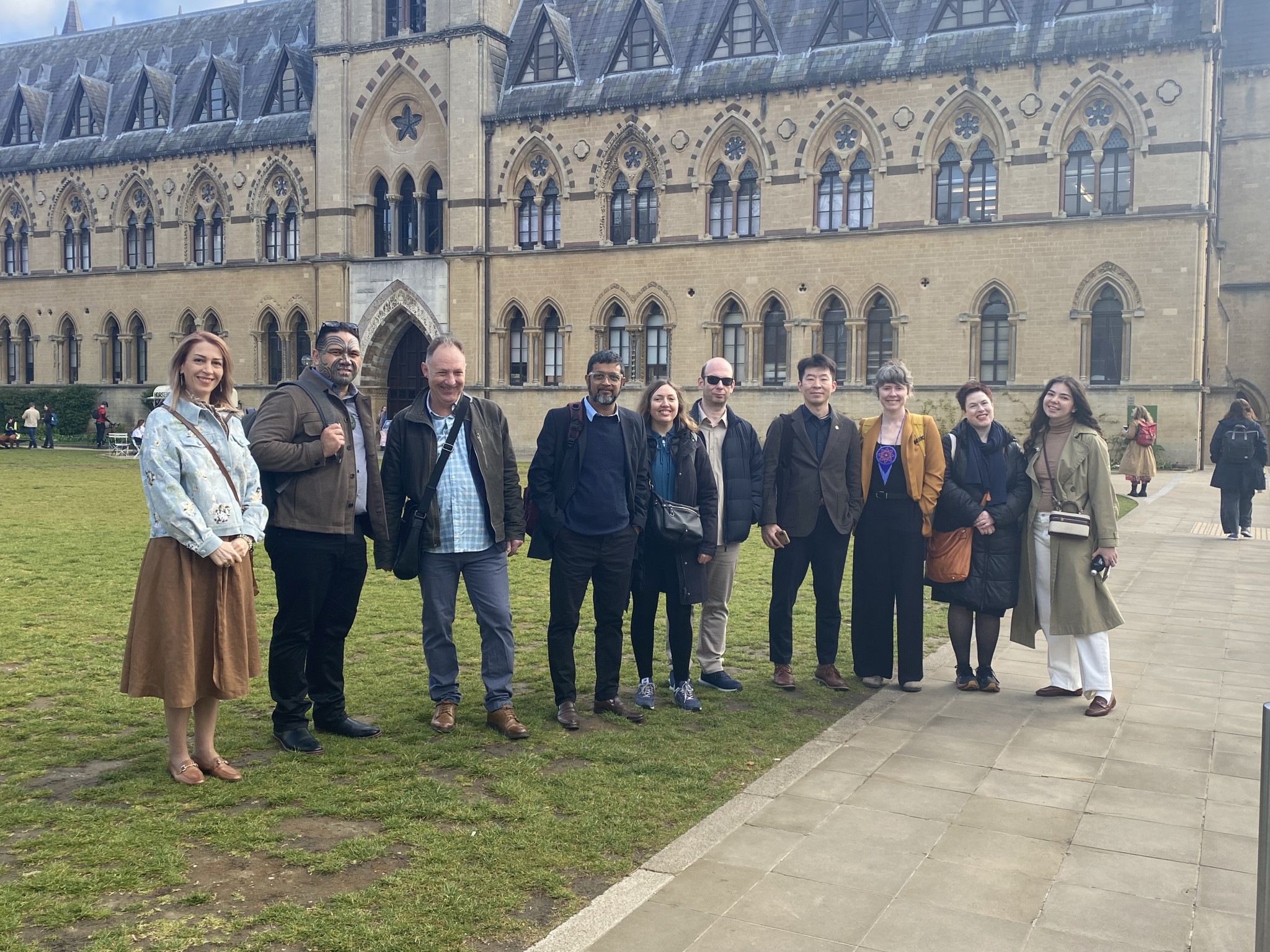
In response to their participation, colleagues from across the globe have shared their reflections of the conference and their two days in Oxford.
Barbara Vujanović, Chief Curator, Meštrović Atelier, Croatia
‘One of the most memorable aspects of the ICOM UK Conference was the emphasis on dialogue, listening and mutual learning. If I had to summarise the spirit of the entire experience in one sentence, it would probably be the question posed by Sunghee Cho, Curator of the Culture and Education Division at the National Asian Culture Center in Korea: ‘What can we learn from each other?’ That simple but powerful question remained with me throughout the conference and, in many ways, perfectly captured the essence of the conference.
Among the many inspiring presentations, I was particularly moved by the session ‘Shared Sacred Sites: A Case Study of Diplomatic Space for Intercultural Dialogue,’ which demonstrated how museums and heritage sites can create spaces for coexistence even within politically and religiously sensitive contexts. I was also deeply interested in the presentation by Mikaël Mohamed from Mucem, ‘Museums and Soft Power in an Era of Hard Realities,’ his reflections on the Mediterranean as a space of constant cultural exchange, overlapping identities and shared histories. A few years ago, I had the opportunity to visit the Bardo Museum in Tunis, which left a profound impression on me. Hearing these ideas discussed in the context of museums, trauma, conflict and cultural diplomacy felt particularly meaningful’.
Alsu Akhmetzyanova, Independent Curator and Art Manager, Uzbekistan
‘A key highlight for me was the exploration of museum diplomacy as a form of soft power – the idea that cultural institutions can make a huge impact on international relations by addressing global challenges, bridging divides and fostering dialogues. It is particularly relevant for countries like Uzbekistan that are actively positioning themselves on the global cultural map changing the overall perception of the country worldwide from the authoritative isolated country to the country with rich heritage and appreciation to art and culture.
Cross-cultural exchange and community engagement sessions showed how museums can be a platform for inclusion and participation. I will use these examples as valuable references for future exhibitions and public programmes to make them both internationally relevant and locally grounded.
The keynote reflections on the need for museum diplomacy and solidarity were especially thought-provoking. The conversations were pushed beyond institutional strategy towards responsibility, ethnics and global interconnectedness’.
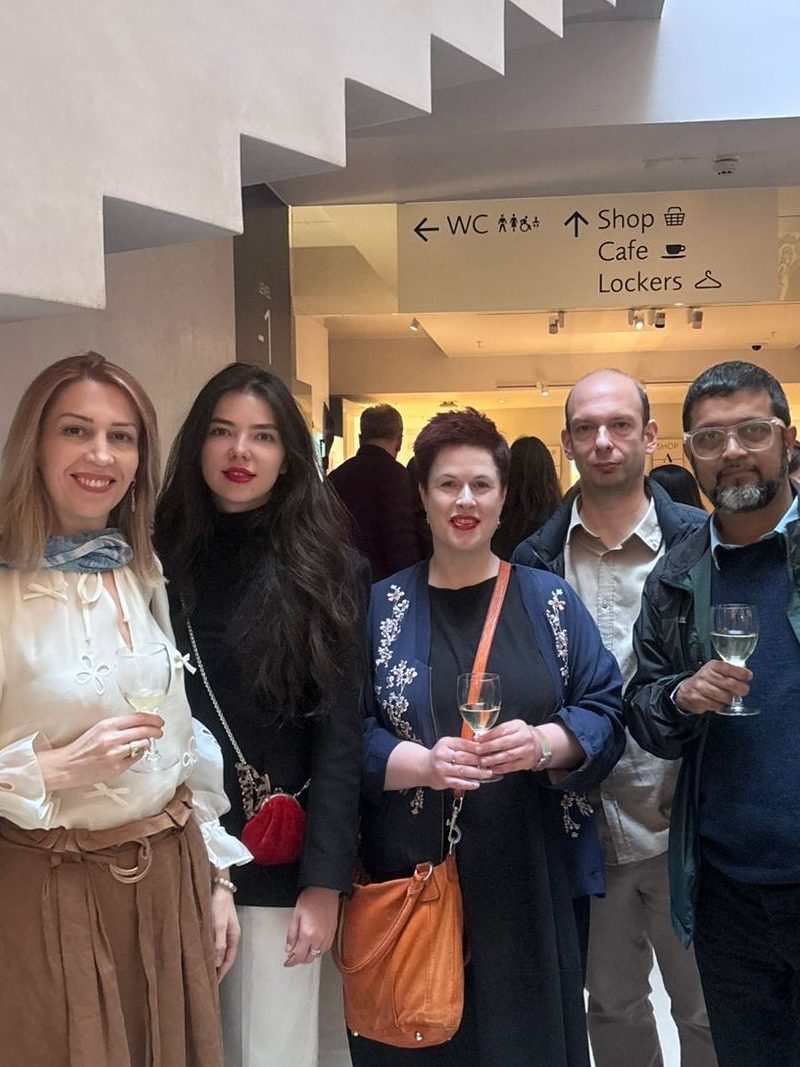
Levent Boz, Specialist, Directorate General of Cultural Assets and Museums, Ministry of Culture and Tourism, Türkiye
‘‘From conflict to recovery – The role of museums in conflict, reconciliation and peace building’ was a quite remarkable session. Mikaël Mohamed’s presentation, ‘Shared Sacred Sites,’ and Roshan Mishra’s ‘Museum Diplomacy: The Evolving Role of Museums in Nepal’s Conflict Recovery’ were both very successful. And the emotionally intense and deeply felt presentation by our Ukrainian colleague, Yuliia Hnat, really marked the session.
In the final keynote speech, Sir Tristram Hunt completely took control of the room. His brave position on returns and restitution, the vision behind the new V&A East project, and the museum’s attempts to change the cultural landscape of East London were really fascinating With his examples of international cooperation, it was a very strong and successful closing keynote for the programme’.
Olena Shevchenko, Senior Researcher and Head of the Archaeological Collections Management & Research Department, Odesa Archaeological Museum, Ukraine
‘During the ICOM UK conference the situation in Ukraine was mentioned many times. This was important and comforting for me because it showed that people have not forgotten about us. One example discussed was the case of the Russian archaeologist Sergey Butyagin, who worked in occupied Crimea and was later detained in Poland while returning to Russia. It was important for me to see that the international academic community understands that work on occupied territory is unacceptable. At that moment I was thinking about Ukrainian archaeologists, including some of my friends, who no longer have access to the sites they excavated for many years because these places are now occupied or destroyed. I think it is very important to continue discussing these issues internationally, because we should think not only about science but also about the moral position of people whose countries and heritage have been attacked.
The day was full of thematic presentations connected with museums, communities, and cultural diplomacy. Listening to these talks helped me better understand this side of museum work and made me think about whether we could create similar projects in our museum. Ukrainian society is very divided now because of the war, displacement, and trauma. I started wondering whether museums can become spaces that unite people. The experience of the speakers showed that this is possible, and I hope to use some of these ideas in my future work.
On the second day of the conference, the last workshop that day was especially important and relevant for me because it was dedicated to ‘Strategic Planning for Disaster: Blue Shield UK Perspective’s. I participated very actively in discussions during this session because, unfortunately, I know what a museum in crisis looks like from personal experience. One of the main things I realised was how different museums function in different countries. In large museums with clear structures, people usually know their responsibilities during emergencies. But in many developing countries this structure often does not exist. Museum workers must make difficult decisions themselves without proper preparation. I felt confident enough to openly share my own observations and experiences of working in a museum during wartime. After the session, other participants came to me to ask additional questions or simply thank me for sharing my experience. The whole discussion was extremely dynamic and interesting’.
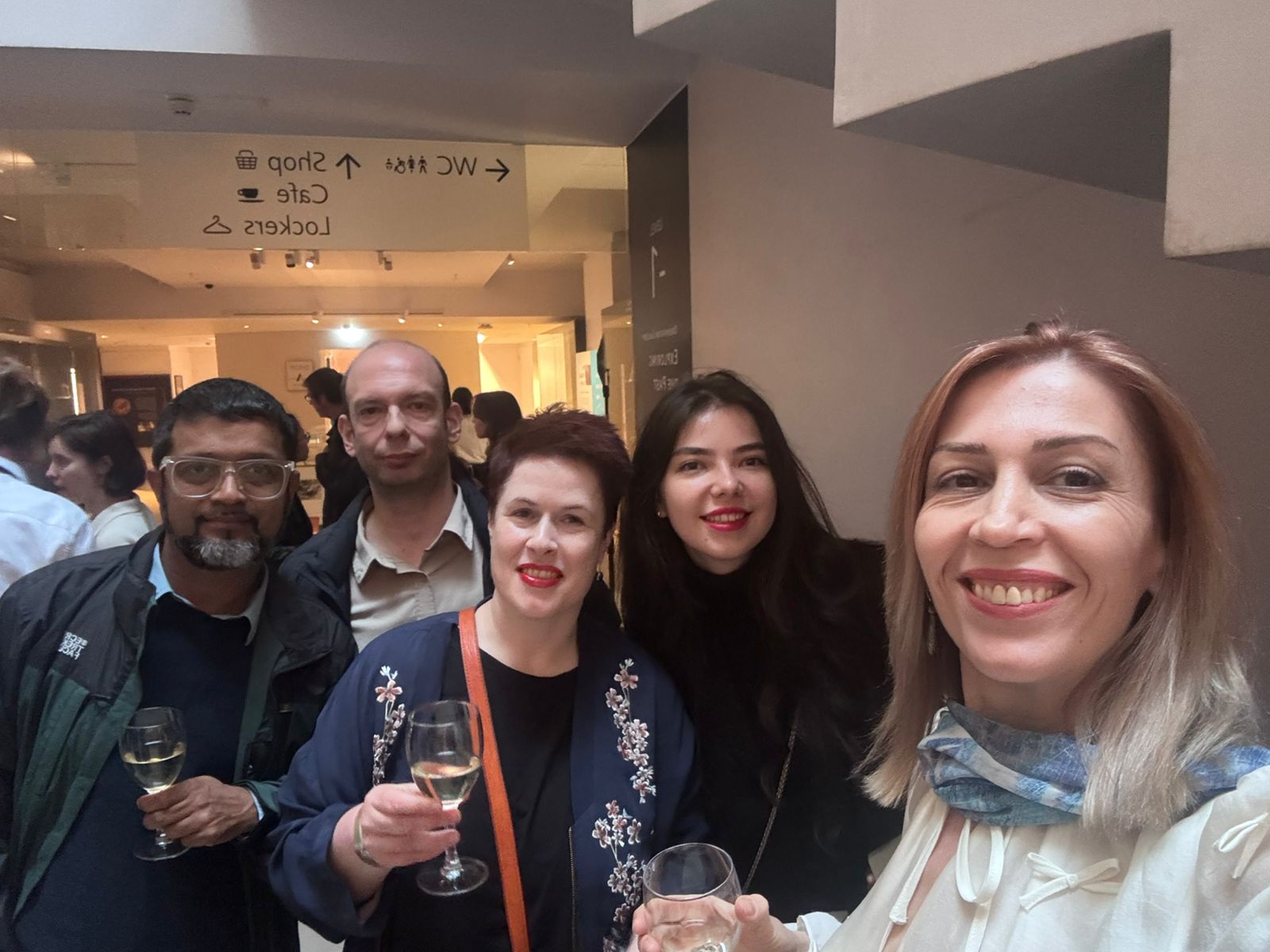
Gao Rui, Researcher, The Palace Museum, China
‘The ICOM UK Conference 2026 in Oxford was an unforgettable experience.
This was my first time attending a museum association conference outside China, and over the course of two days I reunited with many colleagues I had met throughout my career, including professionals from the British Museum, the Science Museum Group, the Imperial War Museum, the V&A, and the British Library, etc. Some of us communicated for years only by email, making these in-person encounters especially meaningful.
Among the many excellent presentations, Laura Frampton, Associate Director of Global Engagement at the Science Museum Group, left a particularly strong impression on me. She introduced the exhibition ‘Two Georges: Parallel Lives in an Age of Revolution’, a collaboration with the Library of Congress that explored the shaping of the United States through the history of science and technology. By focusing on George Washington and George III’s shared interests in science and agriculture, the exhibition created an innovative perspective on British and American history. Laura also mentioned the clock exhibition jointly organised by the Science Museum and the Palace Museum — a project for which I served as project manager and one of the most important international projects of my career. Hearing it discussed as an example of successful international collaboration made me deeply proud. What stood out in Laura’s examples was the importance of finding a ‘sweet spot’ in international cooperation: identifying shared themes while drawing on each institution’s unique strengths.
Sir Tristram Hunt’s closing remarks also resonated strongly with me. Speaking about geopolitical tensions, regional conflicts, and economic decline as ‘hard realities,’ he argued that museums matter not despite these realities, but because of them. Museums, he suggested, should use ‘soft power’ to respond to these challenges and foster dialogue and understanding.
The second day of the conference focused on workshops, which were highly interactive and engaging. The morning sessions centred on the art of building networks, especially in enduring cross-cultural partnerships. Through rapid group discussions and brainstorming exercises, participants were encouraged to reflect on practical approaches to collaboration.
In the afternoon, Silke Krummel, head of Agency of International Museum Cooperation based in Berlin, introduced the mission and work of this newly established organisation. Silke and I had previously met at the Palace Museum, so it was wonderful to reconnect and learn more about the ‘institutional efforts’, to support international museum partnerships.
The conference concluded with a ‘Museum Walking’ programme themed around ‘Shakespeare’s Oxford’. Starting from the Oxford Museum, we retraced connections between Shakespeare and the city while revisiting scenes from his plays and had some roleplay reading sessions. It was a memorable and imaginative way to end the conference, and it gave me a new appreciation for Oxford’s cultural atmosphere’.
