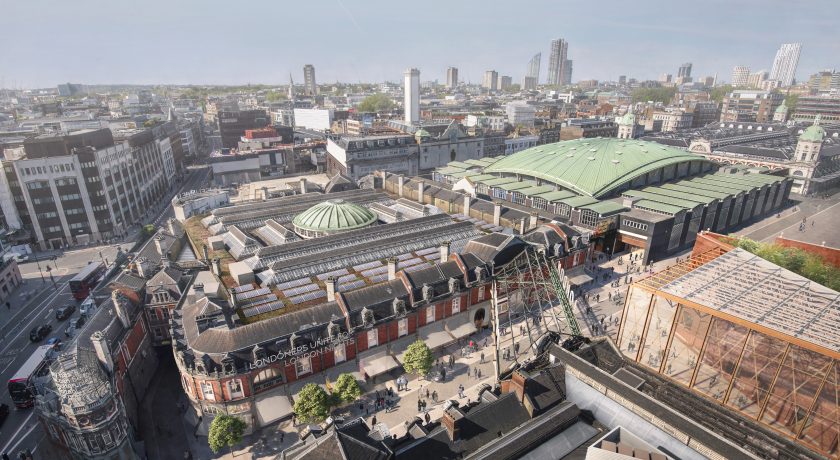
After a decade in the making, London Museum has announced it will open the doors to its new permanent home in Smithfield’s historic General Market on 28 November 2026.
“I hope our museum is a place where people can come together, feel at home, and find themselves grounded in the lives, treasures, challenges and innovations of this city’s vast history.” Sharon Ament, Director of the London Museum
Heritage Conservation at Scale
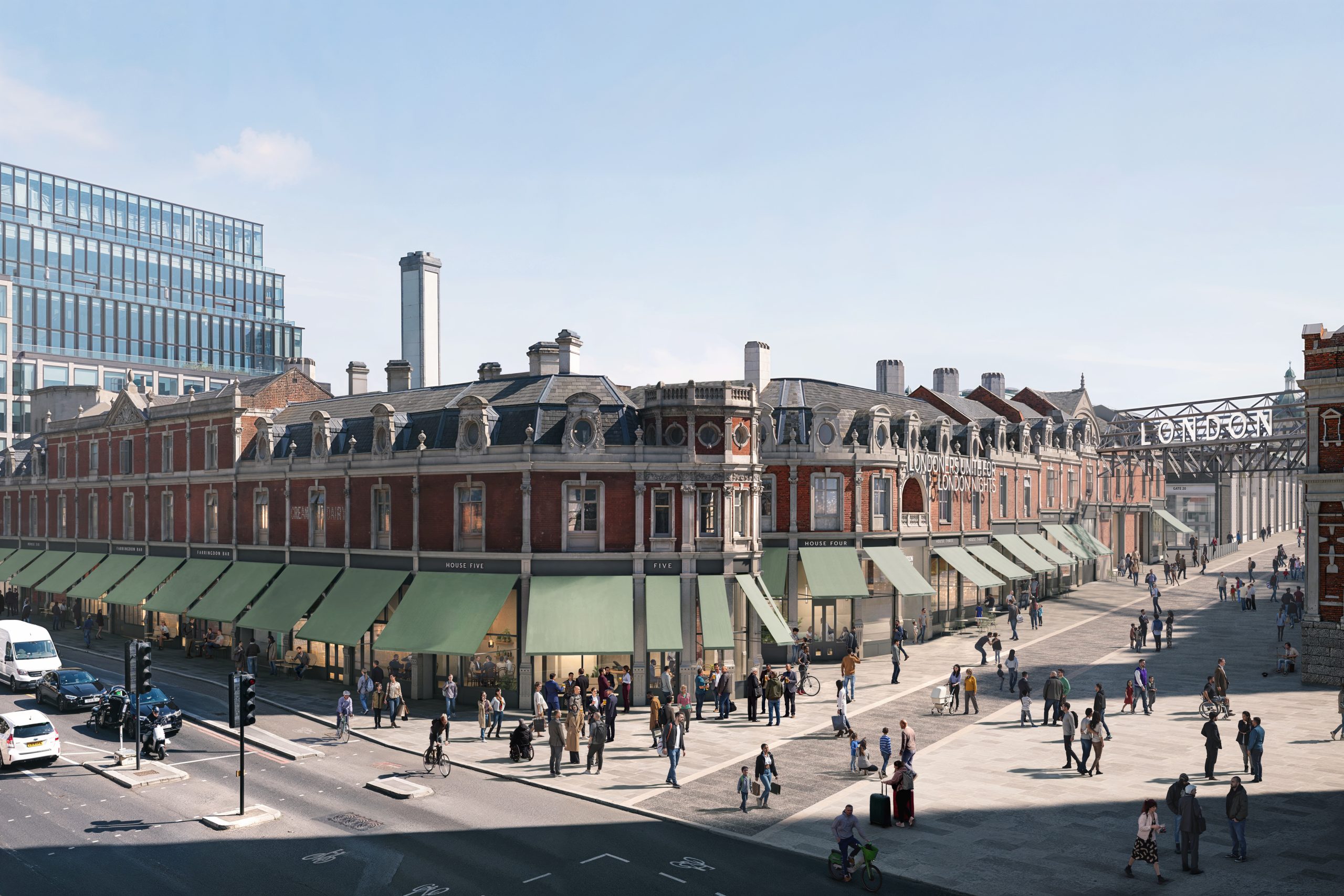
The new building is the restored General Market, designed in 1883 by Sir Horace Jones, the architect behind Tower Bridge and Leadenhall Market, and shuttered in the 1990s after more than a century of use. Its transformation, led by Stanton Williams and Asif Khan with conservation architects Julian Harrap, is a substantial act of conservation in practice. The careful preservation and reinstatement of a listed Victorian structure, returned to sustained public use while meeting the demands of a world-class museum environment.
The project drew on expertise from over 70 specialist trades, and since 2023 has provided hands-on training for more than 40 apprentices across disciplines from plumbing and electrical engineering to sustainable construction management. The restoration work engaged some of the UK’s leading heritage craftspeople; including the country’s last heritage coppersmiths, master stonemasons, and Welsh blacksmiths restoring decorative ironwork. making the project a significant vehicle for skills preservation in the heritage construction sector.
Among the rediscovered architectural features is an 800-square-metre system of vaults beneath the building, and a perimeter of original heritage shopfronts now integrated into the museum’s public spaces.
Sustainability as Infrastructure, Not Afterthought
The project’s environmental credentials are embedded at the structural level. Targeting a BREEAM ‘Outstanding’ rating, placing it in the top 1% of buildings worldwide, the museum incorporates geothermal energy, rainwater-powered sanitation, and an industry-first eco-concrete mix. For the sector, the reuse of the Smithfield market buildings themselves represents perhaps the single most impactful sustainability decision: avoiding the embodied carbon of new construction entirely.
This positions London Museum at Smithfield as a potential model for sustainable heritage development, one that other institutions planning capital projects may find inspiring.
 Secchi Smith Asif Khan-scaled.jpg)
Collection, Display, and a New Interpretive Framework
Drawing from a 7-million-object collection, the world’s largest relating to a single urban centre, the permanent galleries ‘Past Time’ are presented both chronologically and thematically for the first time. This dual-framework approach reflects ongoing sector-wide conversations about how to balance narrative accessibility with academic approaches in large-scale permanent displays.
Highlights of note include:
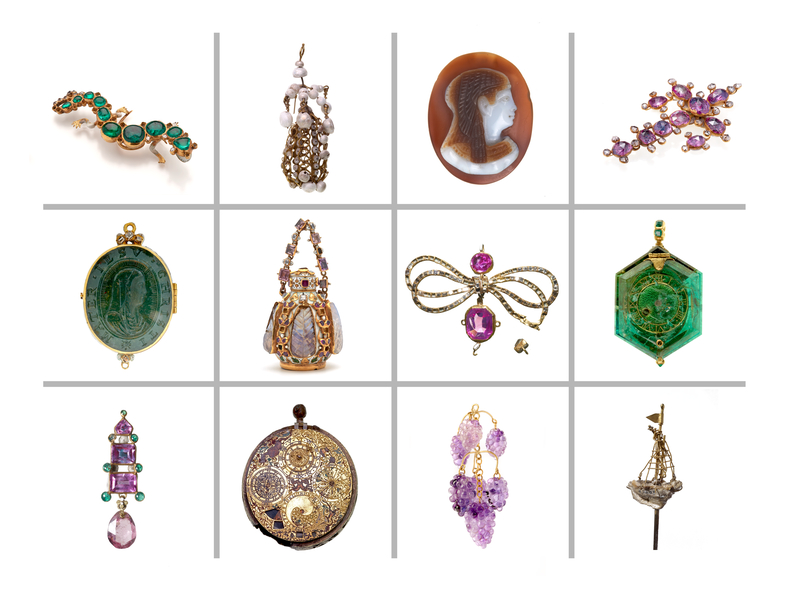
- The Cheapside Hoard: displayed in its fullest-ever assembly in the new Goldsmiths’ Gallery, one of the most significant collections of Elizabethan and Jacobean jewellery
- Roman writing tablets from the Bloomberg Collection: over 14,000 artefacts comprising the largest archaeological deposition ever gifted to the museum, including the city’s earliest surviving written voices
- A six-metre viewing window at Roman street level offering a live view of passing Thameslink trains: a formally novel interpretation device that collapses the boundary between the archaeological past and the contemporary city
The museum also brings together an unparalleled suffragette collection, including Emmeline Pankhurst’s hunger strike medal and the court warrant issued to Sophia Duleep Singh, alongside contemporary protest objects representing disabled-led activism and UK Black Pride, reflecting evolving approaches to collecting living history and activist material culture.
Community Co-Creation
Over 100,000 people contributed to the development of the museum, a figure that speaks to an extensive public engagement process.
The museum launches with a programmatic framework built around rotating Guest Editors; cultural practitioners invited to shape a season of events and experiences through one of four thematic lenses – tastes, sounds, plays, and wears. The inaugural season, London Tastes (November 2026 – August 2027), is co-curated by food writer Ruby Tandoh and journalist Jonathan Nunn and sponsored by Sainsbury’s.
Rather than a traditional temporary exhibition model, Guest Editors influence the museum’s shop, restaurant, events programme, and interpretation simultaneously – an integrated approach to cultural programming that blurs the line between curator, collaborator, and commissioner.
The project was developed through a partnership between the City of London Corporation and the Mayor of London, with philanthropic support from Bloomberg Philanthropies, the Goldsmiths’ Foundation, The Linbury Trust, and The National Lottery Heritage Fund.
The museum expects to welcome 2 million visitors annually, and a second phase is already planned: the adjacent Poultry Market opens in 2028, adding two temporary exhibition spaces, a dedicated learning centre, and a collections store.
Reopening in time for the museum’s 50th anniversary, London Museum at Smithfield is both a culmination and a starting point – offering the sector a substantial case study in heritage-led regeneration, collections access, and the evolving social role of the city museum.
Admission to permanent galleries is free. London Museum, West Smithfield, opens on 28 November 2026.
